Salem: 503-339-7351 FAX: 503-575-2417
  info@imgclinics.com
  MTT: 9–6 PM W: 9 AM–2 PM F: Admin only S&S CLOSED
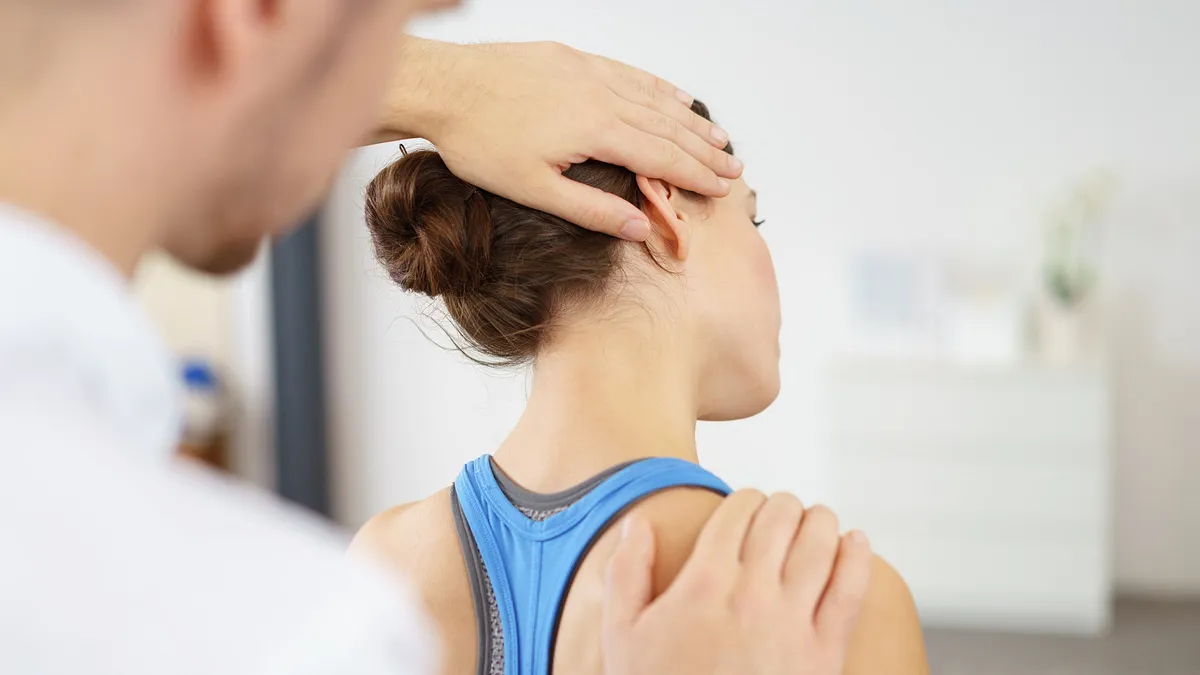
Your path toward better movement and less pain
Neck Pain Treatment in Salem, Oregon
Neck pain can affect far more than your neck. It can interfere with sleep, driving, work, exercise, concentration, and even simple movements like turning your head or looking down at your phone.
At InterState Medical Group, Dr. Michael LoGiudice and our clinical team evaluate the cause of your symptoms and build a treatment plan around restoring movement, reducing irritation, and improving function. Whether your pain began gradually or followed an injury, our Salem clinic offers conservative options designed to help you move comfortably again.
What Causes Neck Pain?
The cervical spine is made up of vertebrae, discs, joints, ligaments, muscles, and nerves that work together to support your head and allow a wide range of motion. Because the neck is both mobile and weight-bearing, it can be affected by injury, repetitive stress, degeneration, poor posture, and nerve irritation.
Common causes of neck pain include:
- Auto accidents and whiplash
- Muscle strains and sprains
- Herniated or bulging discs
- Degenerative disc disease
- Osteoarthritis
- Facet joint irritation
- Spinal stenosis
- Postural stress
- Sports injuries
- Work-related injuries
- Muscle tension and guarding
Some neck problems remain localized. Others can irritate nearby nerves and cause symptoms into the shoulders, arms, or hands.
Neck Pain After an Auto Accident
Rear-end collisions are a common cause of cervical injuries. During a crash, the head and neck may move rapidly through flexion and extension, placing stress on muscles, ligaments, joints, discs, and other soft tissues.
Symptoms may include:
- Neck pain and stiffness
- Headaches
- Upper-back pain
- Shoulder pain
- Muscle spasm
- Reduced range of motion
- Dizziness
- Pain traveling into the arm
- Numbness or tingling
Symptoms do not always appear immediately after an accident. Some patients notice increasing pain or stiffness over the following hours or days.
At InterState Medical Group, we regularly evaluate and treat patients following motor vehicle collisions and can perform on-site digital X-rays when clinically appropriate.
Herniated Discs and Nerve Irritation
The discs between the cervical vertebrae help absorb stress and allow movement.
When a disc becomes irritated, bulges, or herniates, it may contribute to inflammation or place mechanical pressure on nearby nerve structures.
This can produce symptoms such as:
- Sharp neck pain
- Burning pain
- Shoulder or arm pain
- Numbness
- Tingling
- Weakness
- Pain that worsens with certain neck movements
When nerve symptoms are present, our goal is to determine where the irritation is coming from and whether conservative care may help reduce mechanical stress on the affected area.
Degenerative Changes and Arthritis
Normal aging can lead to changes in discs, joints, and supporting tissues of the neck.
These may include:
- Disc narrowing
- Osteoarthritis
- Bone spurs
- Facet joint degeneration
- Reduced mobility
- Spinal stenosis
These changes do not automatically mean pain is inevitable.
Many patients can improve mobility, strength, and function even when degenerative changes are visible on imaging.
Our focus is not simply on what an X-ray looks like. We evaluate how your neck actually moves and functions.
Poor Posture and “Tech Neck”
Long hours spent looking at phones, laptops, monitors, or tablets can increase mechanical stress on the neck and upper back.
Over time, this may contribute to:
- Forward-head posture
- Tight upper-trapezius muscles
- Shoulder tension
- Reduced cervical mobility
- Headaches
- Upper-back discomfort
Treatment may include hands-on care, posture correction, strengthening, mobility exercises, and ergonomic recommendations.
How We Evaluate Neck Pain
A proper examination helps determine whether your symptoms are primarily muscular, joint-related, disc-related, neurological, or a combination of factors.
Your evaluation may include:
- Range-of-motion testing
- Orthopedic testing
- Neurological testing
- Muscle and soft-tissue examination
- Postural assessment
- Strength testing
- Functional movement testing
When clinically appropriate, digital X-rays can be performed directly in our Salem clinic.
If advanced imaging such as MRI or CT is needed, additional diagnostic evaluation can be coordinated or recommended.
Conservative Neck Pain Treatment
Treatment at InterState Medical Group is customized to the individual.
Depending on your condition, your care plan may include:
- Chiropractic adjustments
- Spinal decompression
- Class IV laser therapy
- Hako-Med bioelectric therapy
- Massage therapy
- Soft-tissue mobilization
- Instrument-assisted soft-tissue therapy
- Therapeutic exercise
- Postural rehabilitation
- Mobility and strengthening exercises
Not every patient needs every treatment.
Our goal is to choose the therapies that best match the source of your symptoms.
Spinal Decompression for Neck Pain
For selected patients with cervical disc problems or nerve irritation, spinal decompression may be incorporated into treatment.
This therapy uses controlled traction to gently unload portions of the cervical spine.
The goal is to reduce mechanical stress on discs, joints, and nerve roots while improving the environment for movement and recovery.
Spinal decompression is not appropriate for every condition, which is why examination comes first.
Class IV Laser Therapy
Class IV laser therapy uses photobiomodulation to deliver light energy into targeted tissues.
It may be used as part of a neck pain program to help reduce pain and inflammation while supporting local tissue recovery.
Laser therapy is often combined with movement-based treatment rather than being used by itself.
Hako-Med Bioelectric Therapy
Hako-Med bioelectric therapy uses controlled electrical stimulation to influence nerve and muscle activity.
Depending on the treatment goal, it may be used to support:
- Pain modulation
- Muscle relaxation
- Muscle activation
- Neuromuscular function
- Circulation
- Rehabilitation
This can be particularly useful when neck pain is accompanied by persistent muscle guarding or nerve-related symptoms.
Massage and Soft-Tissue Therapy
Muscle tension is often both a cause and a consequence of neck pain.
Our licensed massage therapists and clinical team may address tight or irritated tissues involving the:
- Upper trapezius
- Levator scapulae
- Cervical paraspinals
- Suboccipital muscles
- Shoulder girdle
- Upper thoracic region
Reducing soft-tissue restriction can make it easier to restore normal movement.
Rehabilitation: Keeping the Improvement
Reducing pain is only part of recovery.
The next step is helping the neck and upper body move more normally and tolerate everyday activity.
Rehabilitation may focus on:
- Cervical mobility
- Posture
- Deep neck-flexor strength
- Shoulder stability
- Thoracic mobility
- Upper-back strength
- Movement confidence
Relieve Pain. Restore Motion. Rebuild Function.
When Should Neck Pain Be Evaluated?
Seek professional evaluation if neck pain:
- Follows an auto accident, fall, or other trauma
- Persists or worsens
- Limits normal movement
- Causes recurring headaches
- Travels into the shoulder or arm
- Produces numbness or tingling
- Is associated with weakness
- Interferes with sleep, work, or daily activity
Significant weakness, severe neurological symptoms, loss of coordination, or other concerning symptoms may require urgent medical evaluation.
Our Goal: Keep You Moving
At InterState Medical Group, we believe successful care should ultimately help you become more capable and independent.
We want to help you:
Move Better.
Turn Easier.
Sleep Better.
Work Better.
Live Better.
Our goal is not to create dependence on treatment.
It is to help restore movement and function so you can return to your life with greater confidence.
Movement is Our Medicine.
Motion Wins.
Neck Pain Care in Salem, Oregon
If neck pain, stiffness, headaches, or radiating arm symptoms are limiting your daily life, our Salem team can evaluate the problem and help determine which conservative treatment options may be appropriate.
Call (503) 339-7351 or schedule an appointment online with InterState Medical Group.