Salem: 503-339-7351 FAX: 503-575-2417
  info@imgclinics.com
  MTT: 9–6 PM W: 9 AM–2 PM F: Admin only S&S CLOSED

Headaches After Car Accident Salem OR | Whiplash & PIP Care | InterState Medical Group
Headache & Migraine Treatment in Salem, Oregon
Headaches After a Car Accident? Your Neck May Be Part of the Problem.
Headaches are common.
But a new headache after a car accident deserves attention. And headaches that continue for weeks after an auto accident deserve extra attention. We have a simple test to determine if the upper ligaments in your neck were injured in auto accident. To our knowledge, not very many clinics use these two simple tests. (hint: one is an x-ray technique and the other is an orthopedic test) If you continue to suffer with headaches long after the initial accident, we may be able to explain why and give you a second opinion.
Following a rear-end collision, side-impact crash, or other automobile accident, the head and neck can be exposed to rapid acceleration and deceleration forces. These forces may irritate muscles, joints, ligaments, discs, nerves, and other structures of the cervical spine.
The result may be:
- Headaches after a car accident
- Headaches associated with whiplash
- Neck pain and headaches
- Pain beginning at the base of the skull
- Headaches that worsen with neck movement
- Muscle tension headaches
- Cervicogenic headaches
- Migraine-like symptoms
- Dizziness or sensitivity to light
- Neck stiffness and reduced range of motion
At InterState Medical Group – Disc Centers of Salem, we evaluate headaches in the context of the entire patient—not simply the location of the pain.
If your headaches began or became worse after a collision, we want to know why.
Find the Dysfunction.
Restore the Motion.
Rebuild the Function.
Headaches After a Car Accident
Headaches are among the symptoms frequently reported following automobile collisions and whiplash-associated injuries.
Some patients feel headache pain almost immediately.
Others notice increasing symptoms later as neck stiffness, muscle guarding, soreness, and restricted movement develop.
A headache following an automobile accident may be associated with several different conditions, including:
- Whiplash-associated disorders
- Cervical joint irritation
- Muscle strain
- Ligament sprain
- Cervicogenic headache
- Muscle tension
- Irritation of structures near the upper cervical spine
- Concussion or other head injury
- Pre-existing migraine aggravated by trauma
Because several different conditions may cause headache symptoms after an accident, proper evaluation matters.
Not every post-accident headache is a migraine.
And not every headache should automatically be treated as a neck problem.
What Is a Cervicogenic Headache?
A cervicogenic headache is a headache associated with structures in the cervical spine.
Patients may describe pain that begins in the neck or near the base of the skull and travels upward toward the back, side, or front of the head.
Symptoms may be accompanied by:
- Neck stiffness
- Reduced neck movement
- Pain with certain head positions
- Tenderness in the upper neck
- Shoulder or upper-back discomfort
- Headaches associated with prolonged posture
- Pain that changes when the neck moves
This type of headache can be especially relevant after a rear-end collision or whiplash injury, where the cervical spine has been exposed to sudden forces.
Determining whether the neck is contributing to your headache requires examination rather than assumption.
Whiplash Headaches
Whiplash involves rapid movement of the head and neck during trauma.
Although many people associate whiplash only with neck pain, headache is another symptom frequently reported following this type of injury.
Patients may describe a:
Whiplash headache
Neck headache
Headache after a rear-end collision
Headache at the base of the skull
Car accident headache
Tension headache after an accident
These terms may describe different underlying problems, which is why diagnosis matters.
At InterState Medical Group, we examine cervical movement, tenderness, orthopedic and neurological findings, muscle function, posture, and other relevant factors when determining whether your cervical spine may be contributing to your symptoms.
Headache, Migraine, or Concussion?
These conditions can overlap in how they feel.
That makes proper evaluation particularly important after trauma.
Migraine
Migraine is a neurological disorder that can produce significant headache pain along with symptoms such as:
- Nausea
- Vomiting
- Sensitivity to light
- Sensitivity to sound
- Visual changes
- Aura in some patients
- Fatigue
Trauma may aggravate migraine symptoms in some people who already experience migraines.
Cervicogenic Headache
A cervicogenic headache is associated with dysfunction or irritation involving structures of the cervical spine.
Neck pain and restricted cervical movement frequently accompany the headache.
Concussion
A concussion is a form of traumatic brain injury.
Symptoms may include:
- Headache
- Dizziness
- Confusion
- Memory problems
- Balance changes
- Light or sound sensitivity
- Nausea
- Difficulty concentrating
Chiropractic treatment is not a substitute for appropriate concussion evaluation.
When symptoms suggest a possible concussion or another condition outside the appropriate scope of conservative musculoskeletal treatment, additional medical evaluation or referral may be necessary.
When a Headache After an Accident Needs Immediate Attention
Most headaches are not medical emergencies.
However, headache following trauma should be taken seriously.
Seek prompt medical attention for symptoms such as:
- Sudden or severe headache
- Rapidly worsening headache
- Loss of consciousness
- Repeated vomiting
- Significant confusion
- Difficulty speaking
- New weakness
- Significant numbness
- Seizure
- Severe balance problems
- Unequal pupils
- Major vision changes
- New or worsening neurological symptoms
Our goal is not simply to treat every headache.
Our responsibility is also to recognize when another form of medical evaluation is appropriate.
Headache Evaluation at InterState Medical Group
Your evaluation begins with a detailed history.
We want to understand:
- When your headaches began
- Whether they started after an automobile accident
- Location of the headache
- Frequency and duration
- What makes symptoms better or worse
- Associated neck pain
- Previous headache or migraine history
- Dizziness or neurological symptoms
- Sleep changes
- Activity limitations
- Previous injuries
- Medications and relevant medical history
Your examination may include evaluation of:
- Cervical range of motion
- Spinal and joint mobility
- Muscle tenderness
- Posture
- Neurological function
- Orthopedic findings
- Strength and movement
- Functional limitations
When trauma is involved, it is clinically appropriate to order digital DAVIS series cervical X-rays with flexion and extension (stress views) which is available on-site at our Salem clinic.
Additional imaging or referral may be recommended when indicated by the examination.
Chiropractic Care for Headaches Associated With the Neck
Some headaches are associated with musculoskeletal dysfunction involving the cervical spine.
For appropriately selected patients, chiropractic care may be incorporated into a broader conservative treatment plan designed to improve cervical movement and function.
Treatment may include:
- Chiropractic adjustments
- Gentle spinal mobilization
- Soft-tissue treatment
- Therapeutic massage
- Myofascial therapy
- Instrument-assisted soft-tissue mobilization
- Therapeutic exercise
- Cervical mobility exercises
- Postural rehabilitation
- Strengthening and stabilization
- Physiotherapy modalities
- Home exercise recommendations
Treatment depends upon the diagnosis.
Not every headache patient receives an adjustment.
Not every patient needs the same treatment.
Your examination guides your care.
More Than Pain Relief
We measure more than whether your headache hurts today.
We also want to know:
Can you turn your head normally?
Can you work comfortably?
Can you drive?
Can you sleep?
Can you exercise?
Are headaches interfering with concentration?
Has your normal activity changed since the accident?
Improvement should mean more than temporarily changing a pain score.
Restore Motion.
Improve Function.
Return to Life.
Oregon Personal Injury Protection (PIP) and Headache Treatment After a Car Accident
If your headaches began following an automobile accident in Oregon, your treatment may fall under your automobile insurance Personal Injury Protection, commonly called PIP.
PIP is designed to provide certain benefits for accident-related medical expenses regardless of who was ultimately responsible for the collision, subject to the terms and limits of the policy and Oregon law.
At InterState Medical Group, we regularly work with patients receiving treatment for auto accident injuries.
Our staff can assist with the clinic-related portions of the process, including:
- Gathering accident information
- Helping patients organize PIP information
- Providing appropriate clinical documentation
- Communicating treatment information when authorized
- Documenting diagnoses and examination findings
- Documenting symptoms and functional limitations
- Documenting treatment and progress
- Providing records when properly requested
Insurance benefits vary by policy, and treatment coverage is determined by the insurer and applicable insurance requirements.
Our goal is to make the administrative side of your care easier to understand so that you can concentrate on your recovery.
Why Documentation Matters After a Car Accident
When a headache begins following a motor-vehicle collision, accurate clinical documentation is important.
Your medical record should clearly identify:
- When the accident occurred
- When symptoms began
- Headache location and frequency
- Associated neck or back symptoms
- Examination findings
- Functional limitations
- Diagnosis
- Recommended treatment
- Response to care
- Changes in symptoms over time
This creates a meaningful clinical record rather than simply documenting that a patient “has headaches.”
At InterState Medical Group, we believe good documentation begins with good examination.
Listen.
Understand.
Document.
Treat.
Reevaluate.
Oregon PIP Law covers much needed Chiropractic Care in Salem
For Oregon auto insurance, the core PIP statutes are in ORS Chapter 742, under Personal Injury Protection Benefits.
- ORS 742.518 — Definitions for Oregon PIP law.
- ORS 742.520 — Requires PIP coverage in qualifying Oregon motor vehicle liability policies and identifies who is covered.
- ORS 742.521 — Conditions that apply to PIP arbitration proceedings.
- ORS 742.522 — Binding arbitration provisions and allocation of arbitration costs.
- ORS 742.524 — Benefits section: defines the actual PIP benefits, including medical expenses, income loss, essential services, funeral benefits, and applicable limits/deductibles.
- ORS 742.525 — Limits/provider-charge rules for services paid under PIP.
- ORS 742.526 — Establishes when PIP coverage is primary and how it coordinates with other coverage.
- ORS 742.528 — Requirements for an insurer’s notice when denying PIP benefits.
- ORS 742.529 — Addresses payments made based on an incorrect determination of responsibility and repayment procedures.
- ORS 742.530 — Permitted exclusions from PIP coverage.
- ORS 742.532 — Allows insurers to provide PIP benefits that are more favorable than the statutory minimum.
- ORS 742.534 — Reimbursement between insurers and arbitration of reimbursement disputes.
- ORS 742.536 — Notice of a third-party claim or lawsuit, insurer election of recovery method, and insurer liens.
- ORS 742.538 — Subrogation/recovery rights involving PIP payments.
- ORS 742.540 — Rulemaking authority relating to PIP.
- ORS 742.542 — Effect of PIP benefits already paid on later damages/recovery.
There are also three closely related provisions immediately after the main PIP sequence that are worth knowing:
ORS 742.544 governs reimbursement of PIP and health-benefit payments, including important protections concerning whether the injured person has first received full compensation.
ORS 742.546 requires specific disclosure language in certain bodily-injury releases involving PIP benefits.
ORS 742.548 governs the required language and circumstances under which certain releases may be rescinded.
For IMG patients, the sections we would consider most important operationally are 742.520, 742.524, 742.525, 742.528, 742.530 and 742.526. Those deal most directly with who gets PIP, what benefits are payable, provider charges, denials, exclusions, and which coverage pays first.
One important currency note: Oregon’s official site says the 2025 ORS edition does not yet incorporate changes from the 2025 special session or 2026 regular session.
Why Choose InterState Medical Group After a Car Accident?
InterState Medical Group provides comprehensive conservative musculoskeletal care from one Salem location.
Depending upon your condition and examination findings, patients may have access to:
- Doctors of Chiropractic aka Chiropractic Physicians
- Whiplash evaluation
- Headache and neck-pain evaluation
- Auto accident rehabilitation
- Therapeutic massage
- Physical rehabilitation
- Advanced soft-tissue therapy
- Class IV laser therapy
- Spinal decompression when appropriate
- Shockwave therapy when appropriate
- Physiotherapy modalities
- On-site digital X-ray
- Referral for additional evaluation when indicated
Our objective is not simply to chase symptoms.
We want to identify the dysfunction contributing to those symptoms and help restore movement and function.
Movement is Our Medicine.
Restoring Function is Our Mission.
Motion Wins.
Headache & Whiplash Chiropractor in Salem, Oregon
If you developed headaches, neck pain, stiffness, dizziness, shoulder discomfort, or reduced movement following a car accident in Salem, Oregon, contact InterState Medical Group for an evaluation.
Same-day appointments may be available.
Walk-ins are welcomed when scheduling permits.
Headache After a Car Accident?
Don’t Guess.
Get Evaluated.
Understand the Cause.
Start Moving Forward.
Call 503-339-7351 to schedule an appointment.
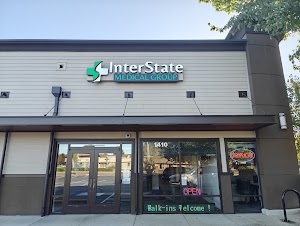
InterState Medical Group – Disc Centers of Salem
1410 Lancaster Dr NE
Salem, Oregon 97301
We Keep Salem Moving.