Salem: 503-339-7351 FAX: 503-575-2417
  info@imgclinics.com
  MTT: 9–6 PM W: 9 AM–2 PM F: Admin only S&S CLOSED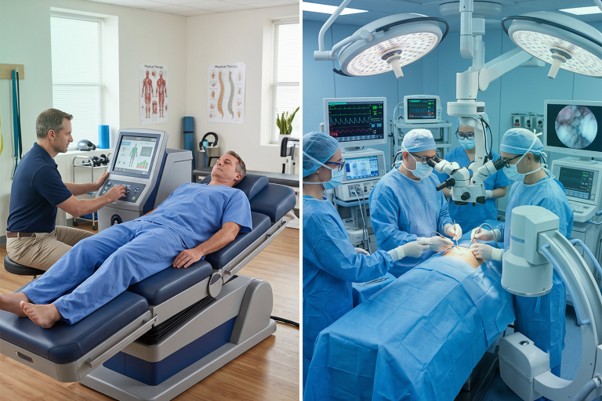
Spinal Decompression vs. Back Surgery: Which Option Makes Sense First?
Back pain can make daily life hard. Sitting, walking, bending, or getting out of bed may hurt. For people with disc problems, one big question often comes up: should they try a non-surgical treatment first, or is surgery needed?
In many cases, spinal decompression therapy may be tried before surgery. It uses gentle, controlled stretching to reduce pressure on parts of the spine. It may help some people with disc-related pain and movement problems. However, surgery may still be needed for serious spine problems. The right choice depends on the cause of the pain, how bad it is, and what a medical exam shows.
What Is Spinal Decompression Therapy?
Spinal decompression is a non-surgical way to treat some types of back pain. It uses slow and controlled stretching of the spine.
The goal is to take some pressure off the discs and nearby nerves. This may help reduce pain and make movement easier. The treatment is done on a special table. The table moves in a careful way while the patient lies down. There are no cuts or stitches.
A treatment plan can be different for each person. Also, spinal decompression is not right for every type of back pain.
What Is Non-Surgical Spinal Decompression?
Non-surgical spinal decompression is an option for people who may be able to improve without an operation. It does not involve cuts, stitches, or removing part of the spine. It may be used as part of a larger care plan. For example, a provider may use decompression along with chiropractic care or physical therapy.
The goal is to help the person move better and manage pain without surgery when it is safe to do so.
When Is Back Surgery Considered?
Back surgery can help when a serious spine problem does not get better with other care. It may also be needed when a nerve is under too much pressure or when there is a major problem with the spine.
Surgery is not always the first choice for back pain. A doctor will look at several things before suggesting it.
These may include:
- What is causing the pain
- How long the pain has lasted
- Numbness or other nerve problems
- Scan or X-ray results
- Muscle weakness
- How the person responds to other care
- How much the pain affects daily life
In some cases, surgery is the best and safest choice. In other cases, non-surgical care may be tried first.
Spinal Decompression vs. Back Surgery
These treatments work in very different ways.
Spinal decompression is non-invasive. It does not require an operation or cuts in the skin. Surgery is different because it involves an operation to repair or remove part of the spine.
Recovery can also be different. Decompression does not leave a surgical wound. Surgery may need more recovery time, depending on the type of operation.
Still, this does not mean decompression is always better. Each treatment has a different purpose.
Can Spinal Decompression Help a Herniated Disc?
A herniated disc happens when the soft inside of a disc pushes through a weak or damaged outer part. This can bother nearby nerves.
It may cause:
- Back pain
- Leg pain
- Numbness
- Tingling
- Weakness
Herniated disc treatment depends on how serious the problem is. Some people get better with non-surgical care. Others may need surgery.
Spinal decompression may be an option for some people with disc pain. The goal is to reduce pressure around the problem area and help improve movement.
However, not every herniated disc needs decompression. A proper check should come first.
What Are Some Back Surgery Alternatives?
Many people want to try back surgery alternatives when surgery is not needed right away. Several non-surgical treatments may help, depending on the cause of the pain.
Chiropractic Care
Chiropractic care focuses on the spine and joints. It may help improve movement and reduce discomfort in some people.
Physical Therapy
Physical therapy uses simple exercises to build strength and improve movement. Strong muscles can give the spine better support.
Spinal Decompression
Decompression may help when pressure on a disc or nerve is part of the problem. It can be used with other treatments as part of a care plan.
Massage Therapy
Massage can help loosen tight muscles and reduce stiffness. It may also work well with other treatments.
The best plan depends on the person. There is no one treatment that works for everyone.
When Should Surgery Come First?
Sometimes, surgery should not be delayed. Certain symptoms can point to a serious spine problem.
For example, sudden loss of bladder or bowel control, severe weakness, or major nerve problems need quick medical care.
These symptoms should not be treated at home. A doctor should check them right away.
Surgery may also be considered when pain stays severe after a proper course of non-surgical care.
Why Is a Medical Check Important?
Back pain can have many causes. A pulled muscle is not the same as a herniated disc. A disc problem is also different from a narrow space around the spinal cord or another spine issue.
So, it is not a good idea to pick a treatment based only on how the pain feels.
A healthcare provider may ask about your symptoms and health history. They may also check your strength, movement, and reflexes. In some cases, an X-ray or other scan may be needed.
This helps find the cause of the pain and choose the right care.
Which Option Makes Sense First?
For many people without a serious spine problem, non-surgical care may be a good place to start. This may include physical therapy, chiropractic care, or spinal decompression therapy.
However, surgery can still be the right choice for serious problems. It may also be needed when other treatments do not help.
The goal is not to avoid surgery at all costs. Instead, the goal is to find the safest treatment for the problem.
A Care Plan Made for Your Needs
Back pain does not affect everyone in the same way. As a result, treatment may need to change as symptoms improve.
At InterState Medical Group, patients can access non-surgical care options such as spinal decompression, chiropractic care, rehabilitation, and other supportive treatments. The right option depends on the person’s condition and health needs.
A personal care plan can help focus treatment on the cause of the pain. It also allows progress to be checked along the way.
Find Out Which Back Pain Option Fits Your Needs
Living with back pain can make even simple tasks feel like a chore. InterState Medical Group offers evaluations and non-surgical care for patients who may benefit from these options. Contact our care professionals to learn whether spinal decompression or another treatment may be right for you.
FAQs
- Is spinal decompression safer than back surgery?
Spinal decompression does not involve an operation, while surgery does. The safest choice depends on the person’s condition, health, symptoms, and medical needs.
- How long does spinal decompression take to work?
Results are different for each person. Some people notice changes after a few sessions, while others may need more time and care.
- Can spinal decompression fix a herniated disc?
It may help some people manage pain from a herniated disc. However, it cannot promise to repair every disc problem or prevent surgery.
- When does back pain need surgery?
Surgery may be needed for serious spine problems, major nerve pressure, severe weakness, or pain that does not improve with proper non-surgical care.
- Can I try non-surgical care before surgery?
For many non-emergency back problems, non-surgical care can be tried first. A medical check can show whether this approach is safe and suitable.
Get Your Back Pain Checked
Do not guess what is causing your back pain. InterState Medical Group can review your symptoms and discuss care options based on your condition.