Salem: 503-339-7351
  info@imgclinics.com
  Open Mon Tue Wed Thur Closed Sat & Sun
Spinal Decompression Therapy in Salem, Oregon
Spinal Decompression in Salem, Oregon
Finally, A Nonsurgical Option for Disc-Related Neck, Back, and Nerve Pain
Persistent neck or back pain can make sitting, sleeping, driving, and working difficult. When an irritated disc or spinal nerve contributes to your symptoms, spinal decompression may be one conservative treatment option.
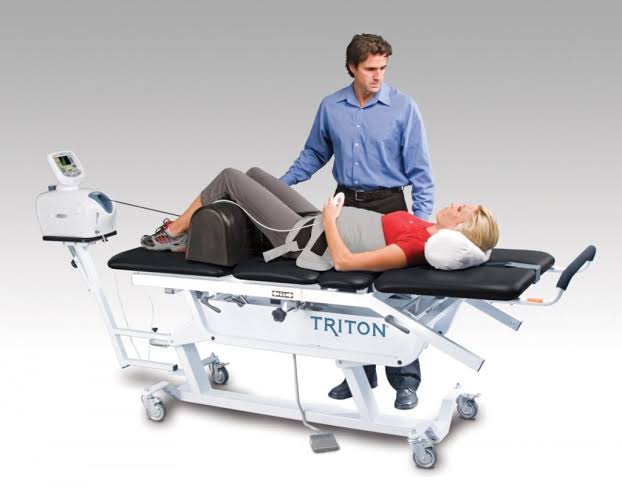
At InterState Medical Group – Disc Centers of Salem, we use the Chattanooga Triton DTS® system to deliver controlled, adjustable spinal traction. Treatment begins with an evaluation to understand your symptoms and determine whether decompression is appropriate.
Our goal is to help you reduce pain, restore comfortable movement, and rebuild the strength needed for everyday life.
Restore Motion. Rebuild Function.
What Is Spinal Decompression?
Nonsurgical spinal decompression uses mechanical traction to apply controlled pulling forces to the spine. The purpose is to temporarily unload spinal structures and reduce mechanical pressure that may contribute to pain.
Your spinal discs sit between the vertebrae. They help distribute loads and allow movement. Disc changes, joint irritation, and inflammation around nearby nerves can contribute to neck or back pain, sometimes with symptoms traveling into an arm or leg.
Decompression may help selected patients tolerate movement more comfortably. We use your examination findings and response to treatment to guide recommendations.
How Does Spinal Decompression Work?
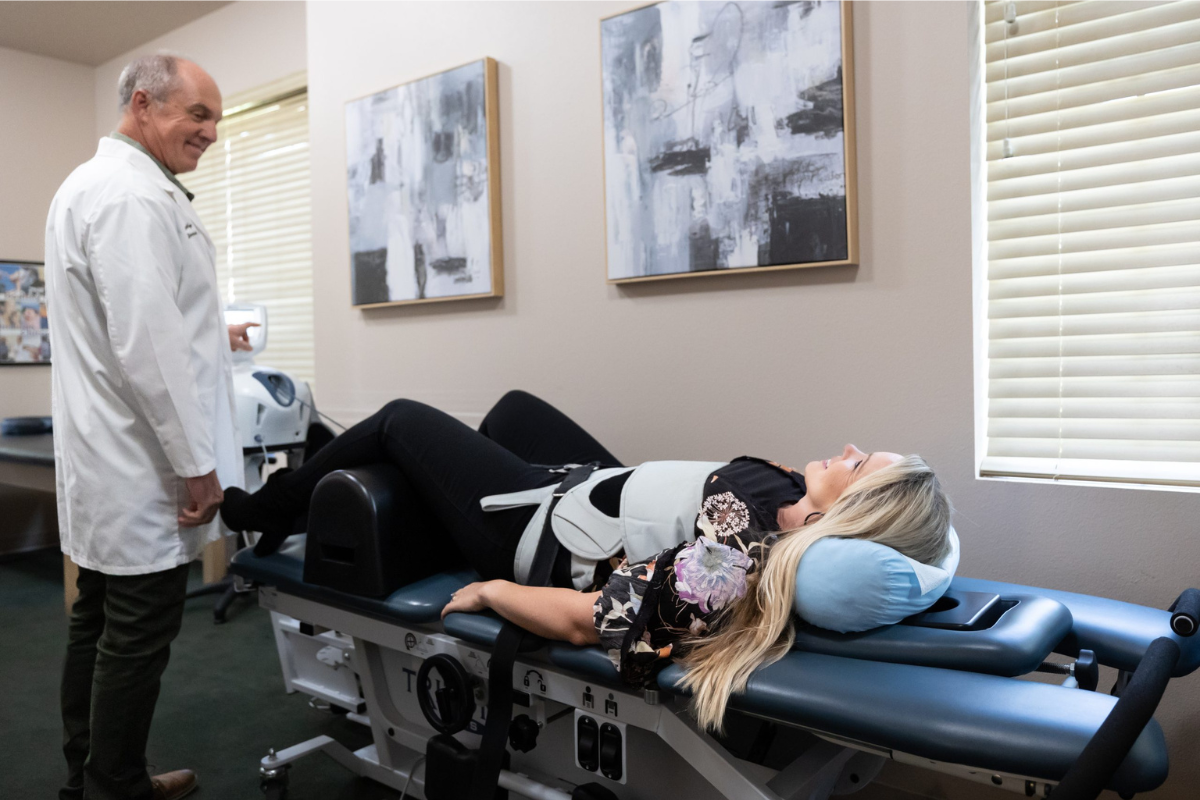
During treatment, you lie on a supportive table. A harness or cervical attachment connects you to the traction system.
Your provider selects the position, pulling force, speed, and treatment pattern. Depending on the protocol, the system applies a sustained pull or alternates between pulling and relaxation phases.
These forces are intended to unload spinal structures and mobilize surrounding tissues. The effect depends on your condition, positioning, and tolerance.
Decompression does not guarantee that a herniated disc will return to its previous shape. Our focus is meaningful improvement in your symptoms and function.
Why IMG Uses Chattanooga Triton DTS®
We use Triton DTS because its programmable features allow treatment to be adjusted to the individual patient.
Individualized Settings
The system allows control of force, speed, hold time, rest periods, and treatment duration. Those settings can be modified as your symptoms and tolerance change.
Gradual Introduction of Traction
A pretension phase introduces the pulling force gradually. This helps assess your tolerance and may ease protective muscle tightening, also called muscle guarding.
Multiple Treatment Patterns
Triton DTS offers static, intermittent, and cyclic traction, along with progressive patterns. Your provider selects the approach appropriate for your findings.
Neck and Lower-Back Applications
The system supports cervical and lumbar treatment using the appropriate positioning and attachments.
Patient Control
You hold a patient interrupt switch during treatment. If you become uncomfortable, you can stop the session and notify our team.
Technology Supports Care. Clinical Judgment Guides It.
Conditions We Evaluate for Spinal Decompression
Following an examination, decompression may be considered for selected patients with:
- Herniated or bulging discs
- Disc-related neck or lower-back pain
- Sciatica or lumbar radicular pain
- Cervical nerve-root irritation with radiating arm symptoms
- Degenerative disc disease
- Certain facet-joint conditions
- Restricted spinal mobility
A diagnosis alone does not establish that you need decompression. We consider your symptoms, neurological findings, health history, and treatment goals together.
Lumbar Decompression
Lumbar decompression focuses on the lower back. It may be considered when disc or nerve-related symptoms affect the back, buttock, or leg.
Cervical Decompression
Cervical decompression focuses on the neck. It may be considered when a cervical disc or nerve-root problem contributes to neck pain or symptoms traveling into the shoulder, arm, or hand.
Your First Visit at IMG
Your first visit focuses on identifying the likely source of your symptoms and determining an appropriate next step.
We discuss your symptoms, previous care, medical history, and the activities you want to regain. Your examination may include movement testing and assessment of strength, sensation, and reflexes.
Bring any existing MRI, CT, or X-ray reports and images, along with information about previous spinal surgery.
Imaging is reviewed when available. Additional imaging is recommended when clinically indicated and likely to affect your care.
If decompression is appropriate, we explain the proposed treatment, expected goals, and how progress will be assessed.
What Happens During a Treatment Session?
Our team positions you on the table with supports suited to the area being treated. A lumbar harness or cervical attachment is fitted, and your prescribed settings are entered.
The system gradually applies traction according to the selected protocol. You may feel a stretching or pulling sensation.
Tell our team immediately if you experience increased pain, worsening arm or leg symptoms, new numbness, or other discomfort. Treatment can be adjusted or stopped.
Before you leave, we review your response and any recommended home activities.
Decompression and Rehabilitation Work Together
Decompression is one part of a recovery plan. When appropriate, it may be combined with:
- Chiropractic care
- Therapeutic massage or other soft-tissue care
- Mobility exercises
- Progressive strengthening
- Spinal stabilization exercises
- Home rehabilitation
Each service is selected for a reason. Your plan should evolve as your symptoms settle and your ability to move improves.
We aim to help you return to work, exercise, family activities, and everyday tasks with greater confidence.
Independence Over Dependence.
Frequently Asked Questions About Spinal Decompression
Am I a candidate for spinal decompression?
You may be a candidate if your symptoms and examination findings suggest a disc or nerve-related condition that could respond to traction. Persistent symptoms despite previous conservative care may justify further evaluation, but treatment is not appropriate for everyone.
The first step is an examination—not automatically committing to a treatment series.
Does spinal decompression actually work?
Some studies report short-term improvements in pain and disability for selected patients, particularly when traction is added to rehabilitation. Other studies find little additional benefit, and long-term evidence remains limited.
We recommend treatment based on your findings and continue it when your response supports its use. Results vary.
Is decompression the same as traction?
Nonsurgical decompression systems use mechanical traction. Triton DTS provides programmable control over how that traction is delivered.
Traction can be manual or mechanical, sustained or intermittent. Adjustable technology helps us tailor treatment, but it does not guarantee a better outcome than every other conservative approach.
Can decompression put a herniated disc back into place?
It cannot promise to return a disc to its original shape. Some herniations naturally become smaller over time, and symptoms can improve without a major change on imaging.
Our treatment goals focus on pain, neurological symptoms, movement, and daily function.
Can it help sciatica?
Decompression may be considered for selected patients whose leg symptoms are associated with lumbar disc problems or nerve-root irritation.
Sciatica describes a symptom pattern. An examination helps determine the cause and whether traction is appropriate.
Can it help spinal stenosis?
Spinal stenosis requires individual assessment. Your symptoms, neurological findings, and tolerance of different positions help determine the treatment approach.
Decompression is not a universal treatment for stenosis and cannot remove bone spurs or permanently reverse structural narrowing.
Is treatment painful?
You may feel a pulling or stretching sensation. Pressure should remain within your tolerance.
Tell us if treatment causes pain or increases radiating symptoms. More force is not automatically more effective.
How long is each session?
Treatment time depends on the protocol, the area being treated, and your tolerance. Our team will explain the planned session length and total appointment time before treatment begins.
How many treatments will I need?
The number and frequency of visits depend on your condition, goals, and response.
We establish a plan after evaluation and reassess progress. Your recommendations may change as you improve or if treatment is not providing meaningful benefit.
How quickly should I notice improvement?
Some patients notice symptom changes early; others improve gradually or receive little benefit.
We assess more than immediate pain relief. Improved walking, sitting, sleeping, working, and exercising help show whether treatment is making a useful difference.
Are there side effects or risks?
Traction can cause soreness, discomfort, muscle spasm, or an increase in symptoms. Screening, appropriate settings, and monitoring help reduce risk.
Report any unusual symptoms promptly. Treatment can be stopped or modified.
Who should avoid spinal decompression?
Conditions that may prevent treatment or require further evaluation include spinal instability, fractures, osteoporosis, spinal infection, certain tumors, vascular conditions, pregnancy, and significant neurological changes.
Previous surgery, spinal fusion, or implanted hardware also require careful review. We follow the equipment’s instructions and your individual clinical circumstances.
Can I receive decompression after spinal surgery?
Previous surgery does not provide a simple yes-or-no answer. The procedure, healing status, hardware, current symptoms, and your surgeon’s restrictions all matter.
Bring your surgical records. Some patients require specialist clearance or a different approach.
Do I need an MRI?
Not every patient needs an MRI. Imaging decisions depend on your symptoms and examination.
X-rays help assess bones and alignment. MRI provides more detail about discs, nerves, and other soft tissues. Existing imaging is helpful, but new imaging should have a clinical purpose.
Can decompression help me avoid surgery?
Some patients improve with conservative care, but decompression cannot guarantee that surgery will be avoided.
If your findings suggest that specialist assessment is needed, we will recommend it. Progressive neurological problems should not be delayed while pursuing a routine treatment series.
Can I receive decompression after a car accident?
Possibly, following an injury evaluation. Auto accidents can cause muscle, ligament, joint, disc, and nerve-related problems.
For patients seeking auto accident injury care in Salem, we first assess the injury and screen for findings that make traction inappropriate. Decompression may be included when your findings support its use.
How is decompression different from an inversion table?
An inversion table uses gravity and body position to create traction. A clinical system such as Triton DTS allows the provider to select and adjust treatment settings while you are supported on a treatment table.
Neither approach is appropriate for everyone. Ask your provider before using an inversion device at home.
Can I keep working or exercising?
Activity recommendations depend on your condition and symptoms. We help identify movements you can tolerate and activities that may need temporary modification.
Your plan should include a gradual return to appropriate activity rather than unnecessary prolonged rest.
What happens if treatment does not help?
We reassess your diagnosis, examination findings, and response. The next step may involve changing the plan, emphasizing another treatment, obtaining imaging when indicated, or referring you to another healthcare professional.
What does treatment cost, and is it covered?
Contact our team for current pricing and to discuss your payment or coverage options. Coverage and authorization requirements vary.
We explain expected charges and the proposed plan before you begin care.
Symptoms That Need Urgent Medical Attention
New difficulty urinating, loss of bladder or bowel control, or numbness around the groin or inner thighs can indicate a spinal emergency. Seek emergency medical evaluation rather than waiting for a decompression appointment.
New or rapidly worsening arm or leg weakness also requires prompt medical assessment.
Schedule Your Spinal Decompression Evaluation in Salem
If neck pain, lower-back pain, sciatica, or disc-related symptoms are limiting your life, start with an evaluation.
At InterState Medical Group – Disc Centers of Salem, we explain your findings, discuss appropriate options, and build care around your goals.
Call 503-339-7351 or request an appointment online.
Movement Is Our Medicine.
We Keep Salem Moving.